Taylor Wagner · 4 September 2026
Harlow's Cultural Tapestry Weaves Migration Data With Local Arts Revival Efforts
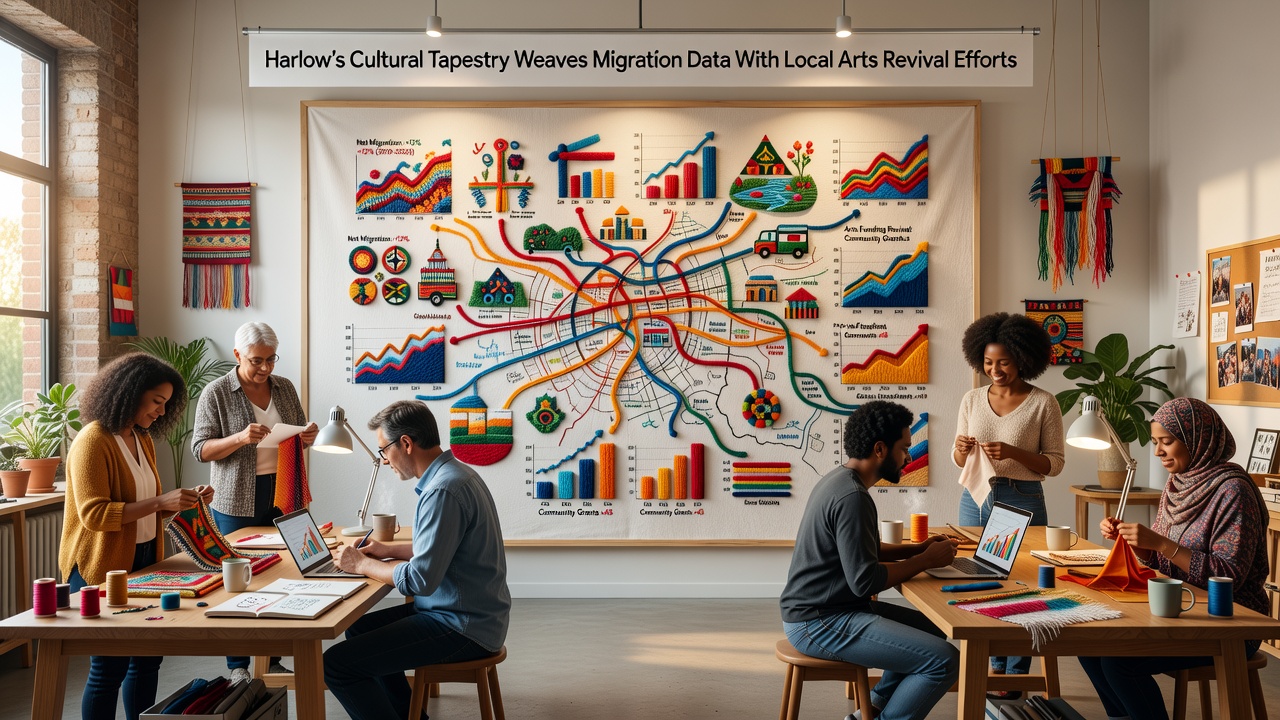
Data from the Office for National Statistics shows that Harlow has experienced notable shifts in population composition over the past decade, with net international migration contributing to a 12 percent increase in residents born outside the UK between 2011 and 2021. Local arts organizations have begun incorporating these figures into programming decisions, creating exhibitions and performances that reflect the changing demographics while reviving traditional community spaces.
Migration Patterns Inform Arts Planning
Researchers at the University of Essex analyzed census records alongside local authority reports and discovered that inflows from Eastern Europe and South Asia have concentrated in specific wards of Harlow. These patterns prompted the Harlow Arts and Culture Partnership to adjust its 2025 grant allocations, directing funds toward projects that map resident origins to visual storytelling initiatives. One initiative pairs recent arrivals with established artists to produce murals that document personal migration routes, and the resulting works now appear in public squares previously underused after evening hours.
Statistics released in early 2026 indicate continued movement into the area, and arts coordinators responded by scheduling September workshops that coincide with the academic year start. Participants use anonymized migration datasets to generate thematic elements such as color palettes derived from origin-country flags or narrative arcs based on journey timelines. This approach has expanded attendance at gallery events by drawing in families who might otherwise remain outside formal cultural venues.
Revival of Underutilized Spaces Through Data-Driven Projects
Local planners identified several vacant retail units along the High Street where foot traffic had declined following the pandemic. Migration data helped prioritize which cultural groups to engage first, leading to pop-up installations that feature oral histories collected from newer residents. The installations rotate quarterly, and organizers track participation rates against postcode-level demographic updates supplied by the local council.
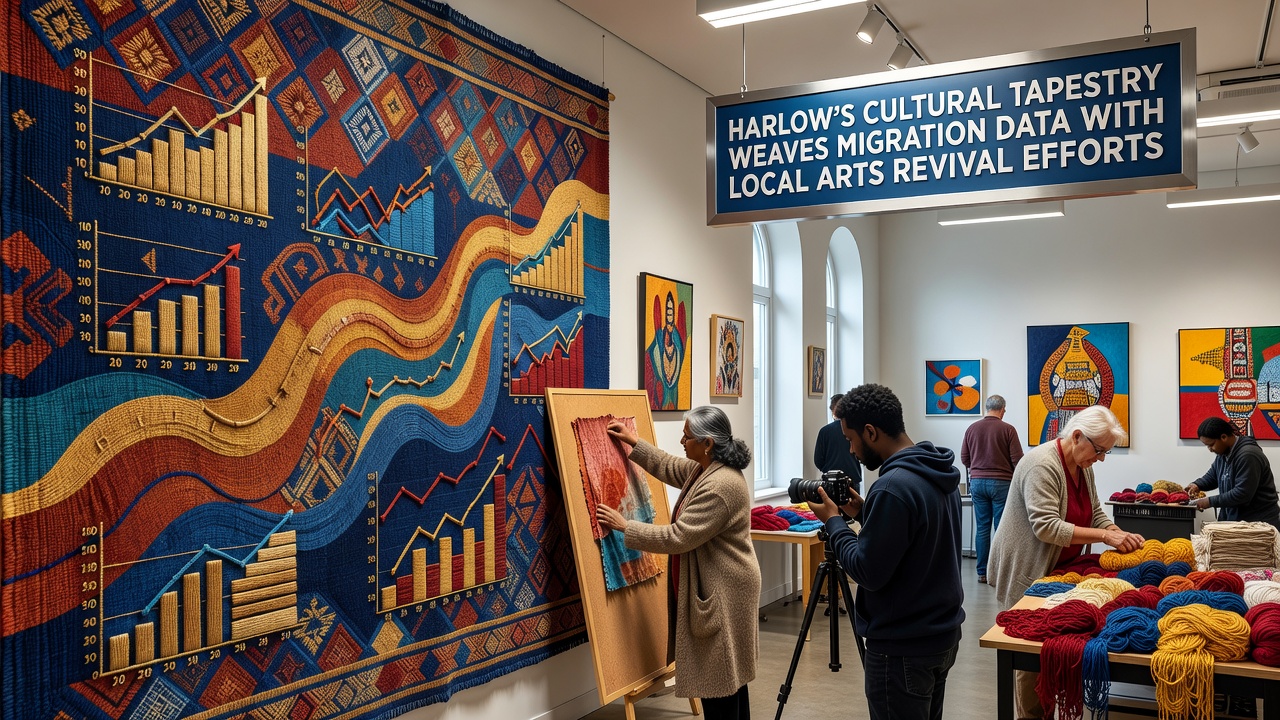
Funding for these efforts comes partly from the Arts Council England and partly from European Union cultural exchange programs that remain accessible through legacy agreements. Project leads cross-reference participant feedback with updated migration tables to refine future calls for proposals, ensuring that programming stays aligned with the most recent arrival cohorts. One example involves a series of dance performances that blend classical forms from Pakistan with contemporary choreography developed by Polish-born residents, and ticket sales data shows consistent sell-outs for the September 2026 run.
September 2026 Events Highlight Ongoing Integration
September 2026 marks the launch of a town-wide festival titled "Harlow Threads," which explicitly uses layered migration charts as both promotional graphics and installation backdrops. Organizers secured permission to project animated population flow maps onto the side of the former town hall, and the display runs nightly for two weeks. Attendance projections drawn from previous years suggest more than 8,000 visitors will pass through the associated workshops and panel discussions.
University researchers continue to supply anonymized datasets to festival curators, allowing real-time adjustments when new quarterly migration statistics become available. This feedback loop has produced measurable increases in repeat visits from communities that previously reported low engagement with local arts programming. A parallel schools program embeds simplified versions of the same data into art curricula, and teachers report higher student interest when lessons connect directly to neighborhood changes visible outside classroom windows.
Measuring Outcomes and Future Adjustments
Evaluation reports prepared by the Harlow Cultural Observatory track several indicators, including venue occupancy rates, artist retention, and self-reported sense of belonging among participants. Early figures show a 23 percent rise in applications for artist residencies from individuals who arrived in Harlow within the last five years. These metrics guide decisions about which data layers to emphasize in the next funding cycle, and coordinators plan to expand the model to neighboring districts by 2027.
Additional partnerships with libraries and community centers allow wider distribution of printed migration summaries alongside exhibition catalogs. The materials present raw numbers alongside interpretive artworks, giving residents direct access to the same information used by planners. This transparency has reduced earlier concerns about top-down decision-making and encouraged more grassroots proposals for the 2026-2027 season.
Conclusion
Harlow continues to integrate fresh migration statistics into its arts infrastructure, producing a growing archive of works that document demographic change through creative expression. The September 2026 festival represents one milestone in an ongoing process that links quantitative population data with qualitative community output. Observers note that the approach has already altered how underused spaces function and which voices receive platform time, setting a template that other towns may examine as their own demographic profiles evolve.