Yves Coleman · 30 October 2026
Harlow Library Climate Memoirs Spark Student-Led Environmental Projects Across Schools
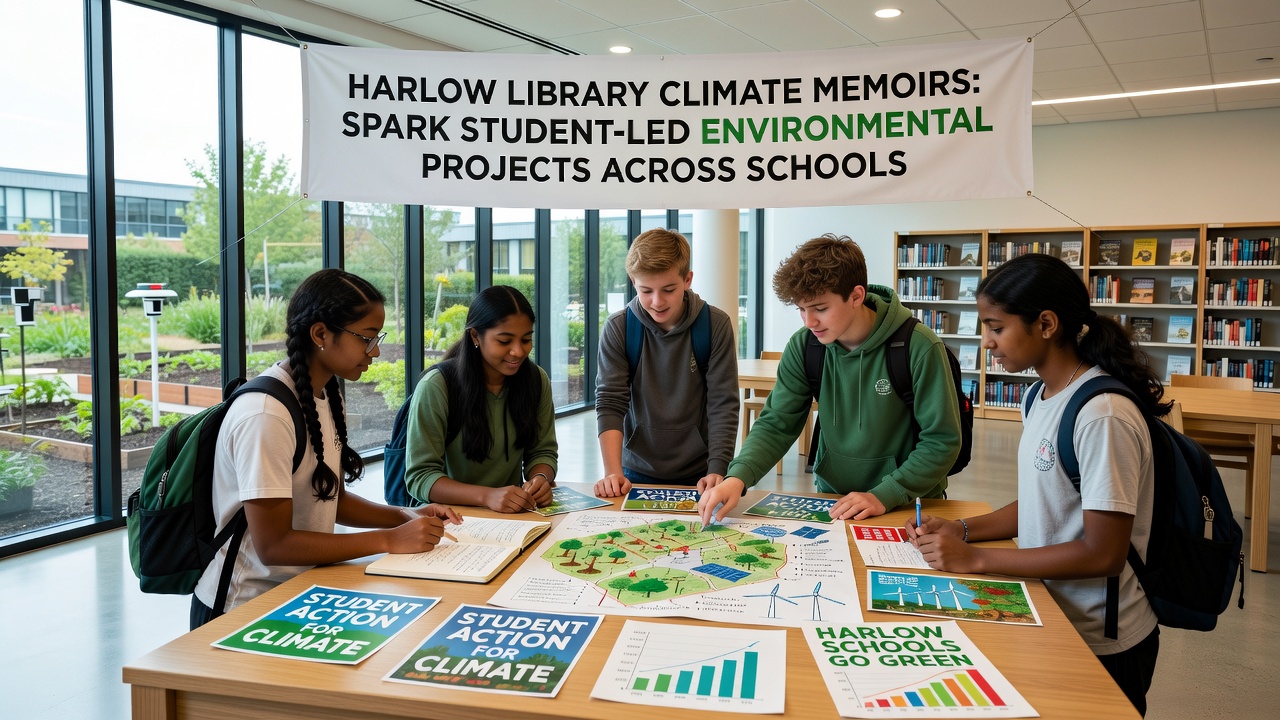
Harlow Library launched its climate memoirs program in early 2025, and the effort quickly expanded into multiple schools where students began organizing their own environmental initiatives based on the personal accounts they read. The collection includes narratives from scientists, activists, and community leaders who documented their experiences wth changing weather patterns, habitat loss, and community responses, and library staff paired these texts with discussion guides that encouraged readers to connect the stories to local conditions in Harlow.
By the start of the 2025-2026 school year, teachers at three elementary schools and two secondary schools had incorporated excerpts into existing science and social studies units, after which students proposed projects ranging from school-wide composting systems to neighborhood tree-planting maps. School records indicate that participation grew from an initial group of 45 students in the first semester to more than 200 by spring 2026, with projects coordinated through student councils rather than direct adult oversight.
Program Origins and Library Implementation
The library acquired the memoirs through a combination of purchases and donations from regional environmental organizations, and staff selected titles that balanced scientific detail with narrative accessibility for middle and high school audiences. Circulation data compiled by the library shows that the climate section accounted for 18 percent of all youth nonfiction loans during the 2025 calendar year, a marked increase from the prior period when environmental titles represented less than 6 percent of the same category. Librarians hosted monthly sessions where students discussed passages and brainstormed action steps, and these meetings often continued informally at school lunch tables or after-school clubs.
One group at Harlow Secondary School read accounts of urban heat islands and subsequently mapped pavement temperatures around their campus using simple infrared thermometers borrowed from the science department. The resulting data set, which they presented to the district facilities office, prompted the installation of additional shade structures over two playground areas the following summer. Similar documentation efforts appeared at elementary sites where younger students tracked lunchtime waste volumes and introduced reusable container incentives that reduced single-use packaging by measurable amounts within one academic term.
Expansion Across District Schools
By October 2026, the original library program had influenced at least seven additional schools through student-to-student presentations and shared project templates. District administrators noted that the initiatives aligned with existing curriculum standards on data collection and civic engagement, which allowed teachers to integrate the work without creating entirely new lesson plans. A central online folder maintained by the library now contains student-submitted reports from each participating site, and these files include photographs, measurement logs, and summaries of outcomes achieved during the previous year.
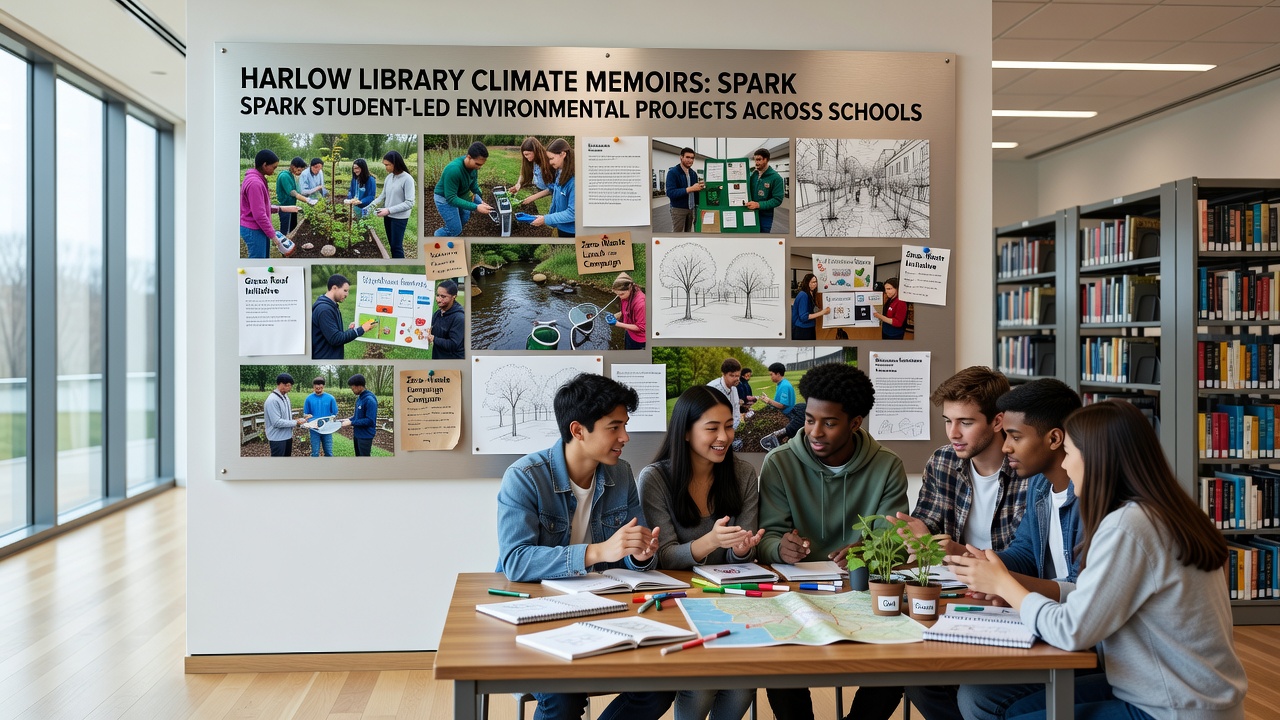
Projects have taken varied forms depending on the age group and available resources. At one primary school, students established a pollinator garden using native plant species selected after reviewing habitat descriptions in several memoirs, while a neighboring middle school focused on energy audits of classroom lighting and subsequently recommended LED retrofits that the maintenance team implemented during a scheduled break. Cross-school collaboration has included joint clean-up events along local waterways and a shared composting network that accepts food scraps from multiple cafeterias.
Documented Outcomes and Supporting Data
School district reports from the 2025-2026 year list 14 distinct student-led projects that originated from the memoirs initiative, and participation logs show consistent attendance at planning meetings even during examination periods. External evaluations conducted by a regional education research center found that students involved in the projects demonstrated higher rates of completing related science assignments compared with non-participating peers in the same classes. The center's analysis drew on anonymized grade records and survey responses collected at the start and end of each semester.
Community partners have contributed materials and expertise, including native plant donations from a local nursery and technical guidance on composting systems from a nearby agricultural extension office. These contributions appear in project budgets submitted by student groups, which remain under 500 dollars per initiative because most supplies come from existing school inventories or small grants administered through the library. The pattern of low-cost, student-managed activities has allowed the model to replicate without requiring large new allocations from district funds.
Conclusion
Records maintained by Harlow Library and participating schools document steady growth in student environmental projects tied to the climate memoirs collection, with activity levels remaining elevated into October 2026. The projects continue to generate measurable outputs such as installed shade structures, established gardens, and reduced waste volumes, while the central repository of student reports provides a running account of methods and results across sites. District staff continue to track participation numbers and resource use to assess whether the approach sustains momentum in subsequent academic years.